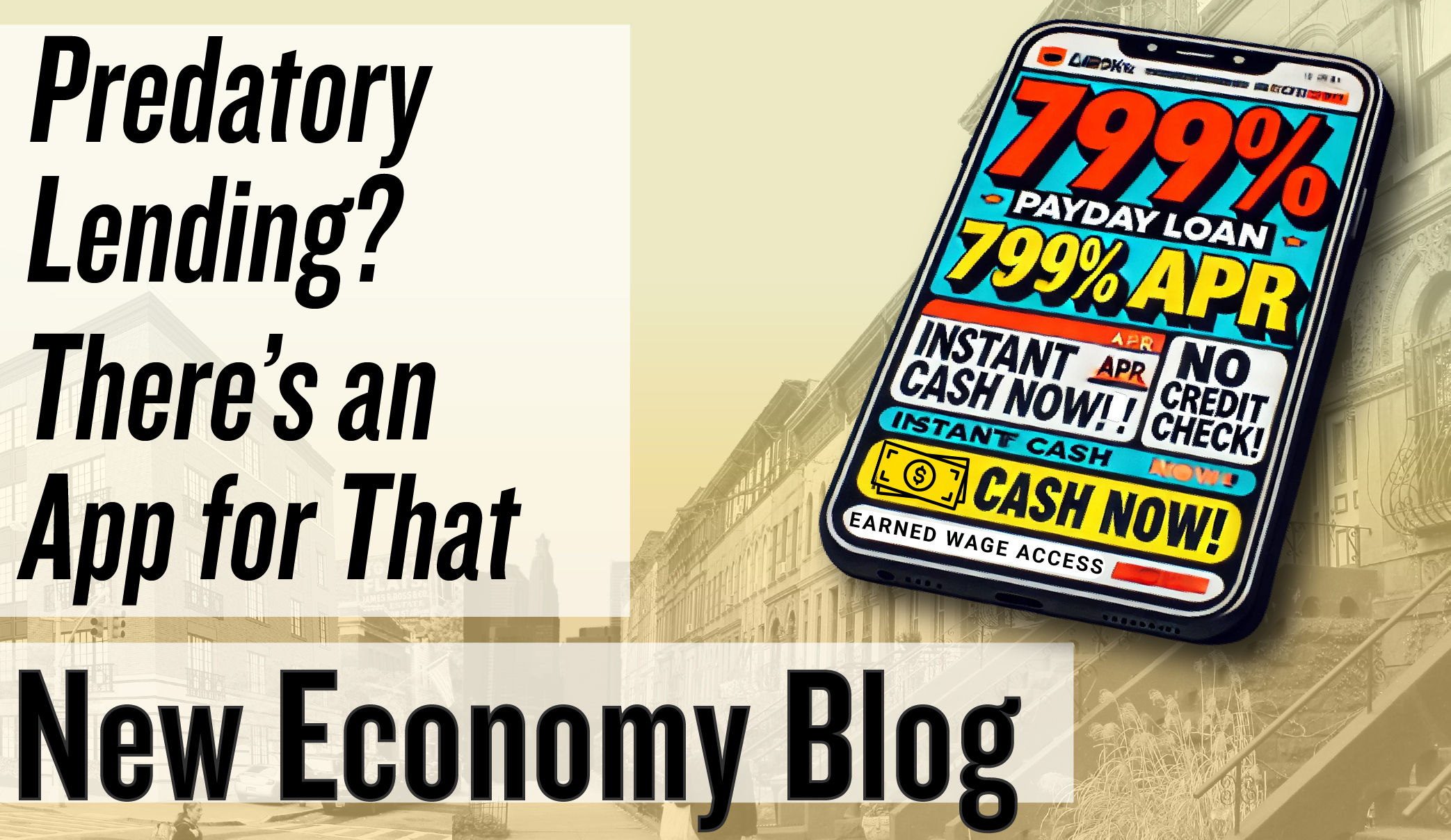
New York stands at a crossroads in the fight against predatory lending. One path would open the floodgates to triple-digit interest loans—marketed as sleek, smartphone apps but designed to trap working people in debt. The other would strengthen the state’s centuries-old usury law and protect New Yorkers from a new wave of big tech financial predators.
This month, New Economy Project joined coalition members from across the state at the Capitol to urge lawmakers to choose the right path: Pass the End Loan Sharking Act—and reject industry-backed legislation that would hand payday loan apps the state’s seal of approval under the guise of regulation.
So far, lawmakers seem to be listening. The State Senate’s Judiciary Committee approved the End Loan Sharking Act last week. But make no mistake—the fintech industry is fighting tooth and nail, pouring massive sums into lobbying and campaign contributions to preserve its lucrative business model. That’s why it’s critical that New Yorkers speak up now.
👉 Take Action – Tell Albany to End Loan Sharking
New Economy Project has rarely seen industry lobbying this intense. While in Albany, legislators repeatedly told us payday loan reps had just visited their offices, pitching talking points to rebrand predatory lending as innovation.
These so-called Earned Wage Access (EWA) companies claim their apps give workers early access to wages, but in reality, they charge hidden fees and extract “tips” that push effective interest rates into the triple digits—a deliberate tactic to evade New York’s usury law, which caps interest rates at 16% APR.

New Economy Project joined AARP-NY, WNY Law Center, and other coalition partners from across the state at the Capitol to urge lawmakers to end loan sharking. Here we are with Senator Jabari Brisport (left) and Assemblyman Al Taylor (right).
Fortunately, New York Attorney General Letitia James is stepping in. Last month, her office sued two of the biggest EWA companies—DailyPay and MoneyLion—for making illegal loans with interest rates that far exceed the state’s usury cap. According to the lawsuits, effective APRs routinely topped 700%—more than 40 times the legal limit.
In one case cited by the AG, a Washington Heights worker took out more than 450 loans from DailyPay in under two years—averaging more than four loans per week—paying nearly $1,400 just to access their own wages.
At New Economy Project, we’ve heard from dozens of New Yorkers ensnared by these predatory apps. As one New Yorker put it, “It’s so easy to get stuck in the cycle of borrowing from the next paycheck.”
In our latest New Yorkers Speak Out video, Drew Brown from the South Bronx shares his experience with payday loan apps—and how they trap working people in cycles of debt.
The toll on working New Yorkers is staggering. Our analysis found that payday loan apps have drained more than $500 million from New Yorkers paychecks since 2019—siphoning money from people already struggling to make ends meet. According to the GAO, most users of these apps earn under $50,000 a year, with Black, brown, and immigrant workers disproportionately represented—making this an urgent matter of racial and economic justice.
These companies are scaling up fast—flooding the subway, break rooms, and social media feeds with deceptive ads. The AG’s lawsuits are a critical first step, but without strong, enforceable legislation, this predatory model—and others like it—will keep spreading and risk becoming a normalized part of working life in our state.
That’s why we need the End Loan Sharking Act. ELSA is simple and powerful: It makes clear that any loan—regardless of what it’s called or how it’s marketed—is subject to New York’s interest rate cap. It gives the state’s financial regulator and the AG the tools they need to crack down on disguised high-interest lending.
With federal protections under attack and predatory fintech growing bolder, New York must lead. Urge your legislators to pass the End Loan Sharking Act today.