Join us on December 15, 2026 for our 30th anniversary celebration! Tickets are limited — purchase yours today.
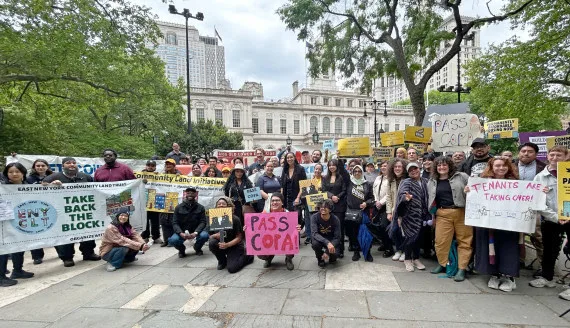
In our latest newsletter: COPA is back! Catch up on the Community Opportunity to Purchase Act, our work launching a national coalition to fight Big Tech payday lenders, a “Solidarity Stroll” with Deputy Mayor Julie Su and other members of the Mamdani Administration, and much more.
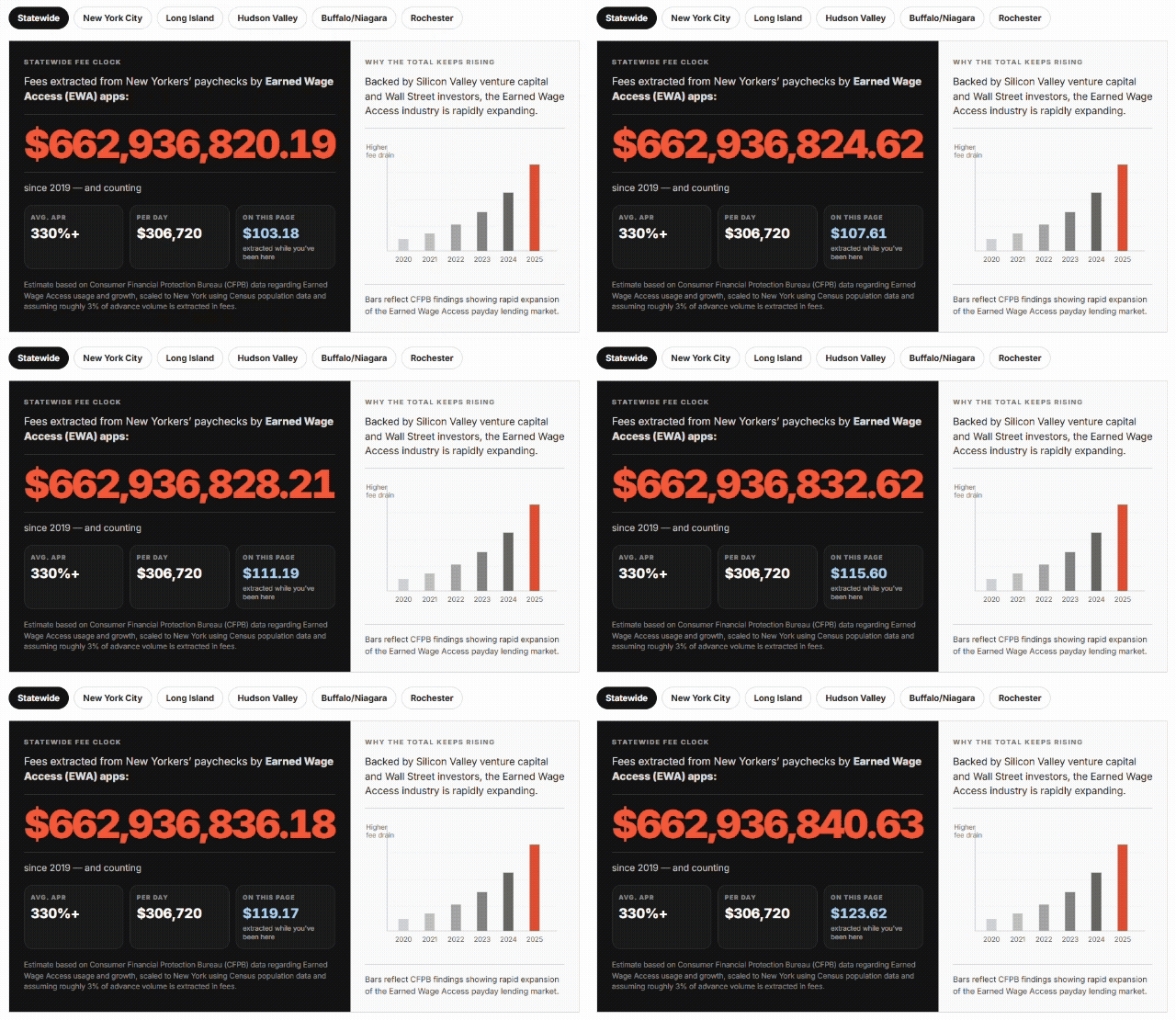
In our latest newsletter, we share a new national profile of our work advancing community ownership; highlights from the annual “Worst Banks Awards;” our new Fintech Paycheck Extraction Clock; and a major housing victory for low-income tenants and homeowners.
What could your community do if your city or state owned its own bank? In 2020, the nonprofit organization Action Center on Race & the Economy published a study showing that state and local governments pay $160 billion in annual interest on the money they borrow.

The acoustics weren’t great but the message was crystal clear. Big banks are systematically screwing ordinary New Yorkers by using taxpayer money to underwrite schemes that promote usury, risk destabilizing financial markets, support ICE, endanger tenants, and deprive regular New Yorkers of services and resources.

As Wall Street profits soar while New Yorkers face a sharply rising cost of living, mounting debt, displacement, and environmental injustice, community groups and elected officials today named New York City’s “Worst Banks” at a mock awards ceremony outside a Citibank branch in Lower Manhattan.
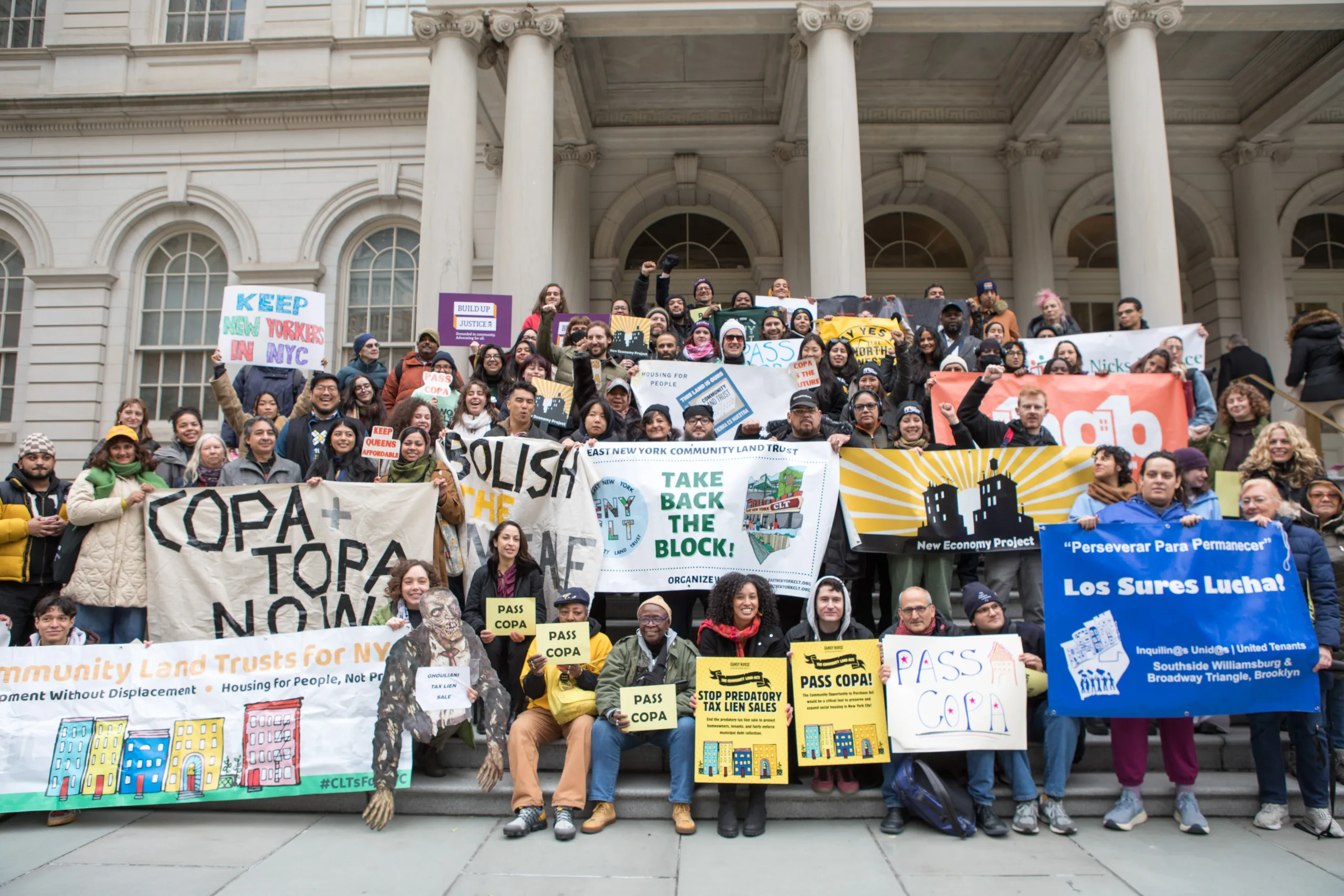
In our first newsletter of 2026, we share updates on the fight for COPA, a major land bank bill victory, our work with the Mayor on financial justice, the launch of the Stop Taking Our Pay Act, and the return of the Worst Banks Awards.
A story about austerity, political discipline, and a vision of public finance that New York abandoned just when it needed it most.

This summer, New Economy Project has been on the move—taking on predatory lenders, pushing for transformative change in our housing system, and much more. Check out our latest round-up for exciting updates and ways to take action!

On May 20, advocates, organizers, and financial justice leaders from across the country came together in Washington, D.C., to mark the release of Public Banks for Racial Equity: Democratizing Finance to Build Community Wealth, a joint report from New Economy Project and Dēmos.

Growing support for public banking presents an opportunity for a transformative shift. Public banks — created by state or local governments and chartered to serve the public interest—can manage public deposits and partner with local lenders to make loans and investments in underserved communities and sectors.
Join us on December 15, 2026 for our 30th anniversary celebration! Tickets are limited — purchase yours today.